Print on demand seller guide
How to market your print on demand business
Your designs have potential. Marketing turns that potential into sales. This guide is your starting point.
The most successful stores aren't necessarily selling the best products. They're just the best at being found.
Marketing is how you close that gap. It doesn't have to be expensive or complicated. Most successful sellers start small and build from there.

Search engine optimisation (SEO)
Get found for free
Optimise your product titles, descriptions and tags with the words your customers are actually searching for. Done well, SEO drives qualified traffic to your store without spending a penny on ads. It takes time to build but compounds over time — the highest-value channel for long-term growth.
Where to start
- Research the keywords your customers are searching for — try Google autocomplete to find ideas
- Include those keywords naturally in your product titles, descriptions and tags
- Set up Google Search Console to track how your store is performing in search results
Email marketing
Market to an engaged audience
There's no better audience than one that's already engaged. Build a mailing list from day one. Offer a small discount in exchange for sign-ups and send regular updates on new products and promotions. Your email list is an asset you own outright, unlike social media followers.
Where to start
- Set up a free Mailchimp account and add a sign-up form to your store
- Offer a small discount (10–15%) to incentivise people to subscribe
- Send a monthly update with new products, promotions and behind-the-scenes content
Paid advertising
Supercharge your growth
Once you're generating organic sales, paid ads on Google or Facebook can accelerate your growth significantly. Start small, test your creative and scale what works. Platforms like Google Ads and Meta have intelligent targeting tools that get your products in front of the people most likely to buy.
Where to start
- Don't start paid ads until you have organic sales — use those to validate your product first
- Start with a small daily budget (£5–10) and test two or three ad creatives at once
- Focus on the ad with the best click-through rate and cut the rest — then scale gradually
How to measure success
The metrics to track for each channel
| Channel | Key metrics to track | What you're aiming for |
|---|---|---|
| SEO | Organic traffic Impressions Click-through rate Keyword rankings | Steady growth in organic visits month on month |
| Social media | Follower growth Engagement rate Link clicks Saves & shares | Engagement rate above 2–3% and consistent follower growth |
| Open rate Click-through rate List growth Unsubscribe rate | Open rate above 20% and unsubscribe rate below 0.5% | |
| Paid ads | Return on ad spend (ROAS) Cost per click (CPC) Cost per acquisition (CPA) Conversion rate | ROAS of 3x or above before scaling spend |
Common mistakes to avoid
What not to do when you're starting out
Spreading across too many channels at once
Pick one or two channels and manage them well. Showing up inconsistently on five platforms is less effective than showing up consistently on one.
Only posting sales content
People follow accounts they find interesting or inspiring — not ones that only try to sell them something. Mix in behind-the-scenes, process and lifestyle content.
Not tracking any metrics
If you don't measure what's working, you can't improve it. Set up Google Search Console and check your social and email analytics at least monthly.
Starting paid ads too early
Paid ads amplify what's already working — they can't fix a product that isn't selling organically. Get your first organic sales before you spend on ads.
Ignoring SEO on product listings
Your product title and description do a lot of heavy lifting. Generic titles like "Art Print" won't rank. Specific, keyword-rich titles will.
Not asking customers for reviews
Social proof is one of the most powerful marketing tools available. A simple follow-up message after delivery can turn a happy customer into your best marketing asset.
Free download
Never run out of content ideas again
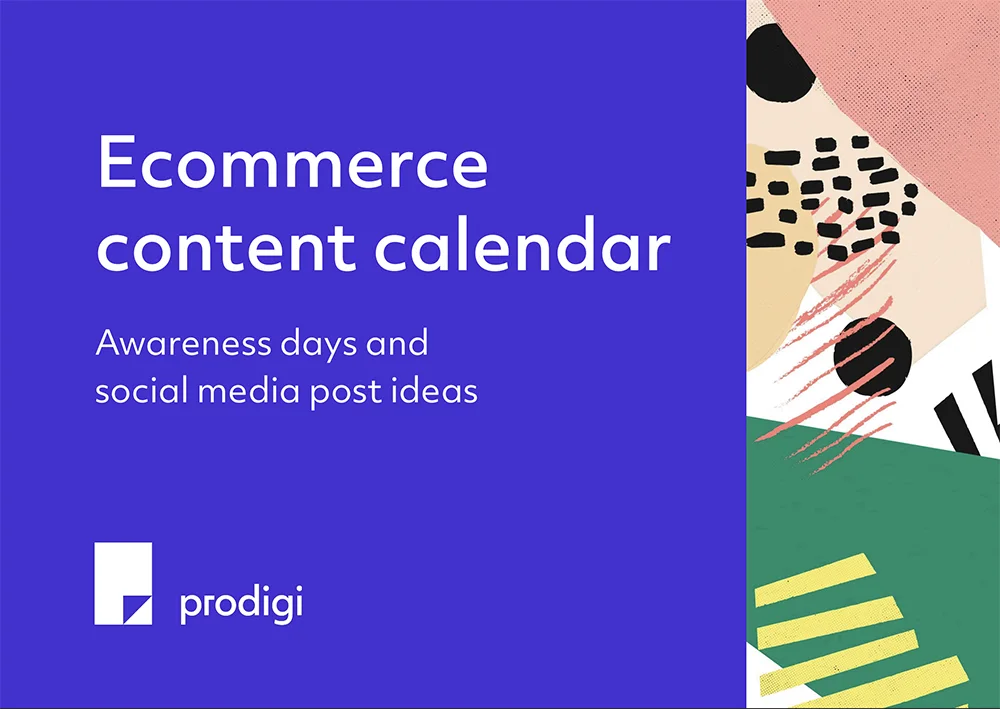
Our ecommerce content calendar is packed with global awareness days and social media post inspiration to keep your channels active all year round.
Useful resources
Free marketing tools to set you up for success



Google Search Console
Track your store's search performance, fix crawl errors and find keyword opportunities.


Marketing Examples
A curated collection of real-world marketing examples to spark ideas and inspiration.
Ready to start selling?
Join thousands of print on demand sellers using Prodigi to turn their designs into income — no upfront costs, no minimum orders.
Social media
Build an audience
Instagram, TikTok and Pinterest are particularly effective for visual products. Post consistently, mix sales content with behind-the-scenes and process content, and let your designs do the talking. Engagement builds trust, and trust drives sales.
How to use social media to increase sales
Where to start